



Landlord Rights Lawyer in Southern California
Do you know what California law actually lets you do when a tenant stops paying, breaks the lease, or simply won't
leave? California has some of the most heavily regulated rental laws in the country, and owners are routinely penalized for
small paperwork mistakes. At Barry Lee O'Connor and Associates, we represent individual landlords and property owners,
property management companies, banks, loan servicers and lenders, corporations, trusts and estates, cities and counties, and
federal agencies, and we help owners across Riverside, San Bernardino, and Orange Counties understand and enforce their
rights under current law.
With more than 70,000 eviction cases filed since 1988, we know the statutes, the forms, and the deadlines that decide
whether a case succeeds or gets dismissed. These laws change often, and what worked last year may not hold up in court
today.
Call our eviction attorney today at (951) 689-9644 or contact our office to schedule a consultation.
Your Rights as a California Property Owner
California law gives owners real rights to protect their investment, enforce their lease, and keep their property safe
and profitable. We represent landlords to assert them:
● The right to timely rent: fast collection actions and lease terminations when a tenant stops paying.
● The right to protect your property: swift removal of tenants who damage the building, hoard, or cause waste that
threatens its condition.
● The right to control occupancy: eviction for unauthorized subletting, unapproved long-term guests, and illegal short-term
rentals that violate your lease.
● The right to decide your investment's future: reclaiming the property for your own use, a family move-in, a major renovation, or leaving the rental market
under lawful no-fault rules.
Under AB 1482's Just Cause and no-fault rules, properties covered by the Tenant Protection Act (AB 1482) carry extra limits on how these rights are used.
The Eviction Process, From Notice to Sheriff Lockout
A California eviction is a summary proceeding with tight deadlines and strict rules. It starts with a written notice and ends with a Sheriff lockout, and every
step has to happen in the right order with the right timing. We manage each stage for you, from the first Unlawful Detainer filing to the final Writ of Possession:
● Step 1: Serve the correct notice (3-Day, 30-Day, or 60-Day, depending on the situation).
● Step 2: Wait for the full notice period to run. Days are counted strictly.
● Step 3: File the complaint in the correct courthouse.
● Step 4: Serve the summons and complaint on every named tenant through a process server.
● Step 5: Take a default judgment if the tenant doesn't respond within 10 court days, or go to trial.
● Step 6: Get the Writ of Possession and deliver lockout instructions to the County Sheriff.
The Forms and Notices California Requires
An Unlawful Detainer runs on a specific set of documents. The wrong form or a missing disclosure can get your whole case dismissed:
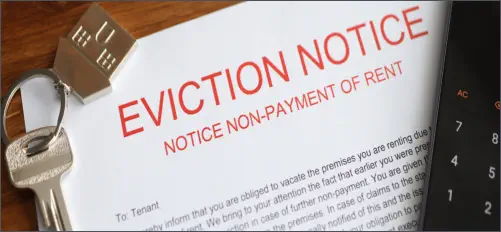
● 3-Day Notice to Pay Rent or Quit: states the exact base rent owed. No late fees, utilities, or damage charges.
● 3-Day Notice to Cure or Quit: for fixable lease violations like unauthorized pets, extra occupants, or HOA breaches.
● 3-Day Uncurable Notice to Quit: for serious situations like crime, property waste, or chronic nuisance. No option to cure.
● 30-Day or 60-Day Notice: ends a month-to-month tenancy. A year or longer needs 60 days.
● Summons (SUM-130) and Complaint (UD-100): the court documents that start the case, filed with the civil case cover sheet and certificate of counsel the court
requires.
● Prejudgment Claim of Right to Possession (CP10.5): keeps unknown occupants from stopping the lockout.
A generic notice pulled off the internet rarely survives a real courtroom challenge. Judges regularly dismiss cases when the paperwork is missing required
language.
The California Statutes Behind Your Rights
Our work is driven by a handful of core Civil Code sections. Knowing them helps you make better decisions about your property. We also handle mobile home
parks, HOA units, foreclosures, and trust-held rentals, which come with rules of their own:
● CCP 1161: the main statute setting the legal grounds for eviction, including non-payment, lease violations, waste, and unlawful business use.
● CC 1946.2: the AB 1482 framework covering Just Cause and relocation assistance.
● CC 1954: landlord entry. You may enter with 24 hours' written notice for repairs, inspections, or showings during normal business hours.
● CC 789.3: bans self-help evictions. Changing locks, cutting utilities, or removing a tenant's belongings can cost up to $100 a day.
● CC 1950.5: security deposits. You have 21 calendar days to return the deposit with an itemized statement of any deductions.


Let’s start a conversation! Whether you’re looking for investment guidance, strategic
planning, or a long-term partnership, we’re here to help.
Contact us to discuss your goals, and let’s work together to turn your vision into reality.
Let’s start a conversation! Whether you’re looking for investment guidance, strategic
planning, or a long-term partnership, we’re here to help.
Contact us to discuss your goals, and let’s work together to turn your vision into reality.



Mon - Friday: 9:00 AM- 4:00 PM
Saturday and Sunday: CLOSED
3691 Adams St
Riverside, CA 92504
(951) 689-9644
udlaw2@aol.com
Disclaimer: Legal services provided by Barry Lee O'Connor & Associates, a Professional Law Corporation, registered with the State Bar of California. Principal office located at 3691 Adams St,
Riverside, CA 92504. This website constitutes an Attorney Advertisement in accordance with California Rules of Professional Conduct. Prior results do not guarantee a similar outcome.



70,000+
Unlawful Detainer
Actions Filed
38+
Years
Experience
3
Counties
Served Daily
100%
Dedicated to
Landlord Representation


Contact Attorney Barry Lee O’Connor & Associates, A PLC
Let’s start a conversation! Whether you’re looking for investment guidance, strategic
planning, or a long-term partnership, we’re here to help.
Contact us to discuss your goals, and let’s work together to turn your vision into reality.











Enforce Your Rights with Focused Legal Counsel
California's landlord-tenant laws leave no room for guesswork, and one mistake can cost you months of rent and expose you to penalties. Don't
attempt a do-it-yourself eviction. Barry Lee O'Connor and Associates A PLC represents property owners across Southern California and is ready to go
to work for you. Call (951) 689-9644 or fill out a Landlord Case Evaluation Form and we will contact you.
Landlord Rights Attorney
Barry Lee O’Connor
NOTICE TO TENANTS: Our law practice is strictly dedicated to
landlord-side representation and real estate asset protection.
We do not represent tenants under any circumstances.
Your rights as a property owner, the legal process
for recovering your property, and the forms and statutes behind
every eviction.
Yes, within limits. Under Civil Code Section 1954, you can enter to make repairs, show the unit to buyers or renters, or run an inspection. You
have to give 24-hour written notice and enter during normal business hours. A true emergency, like a gas leak or fire, doesn't require notice.
If you gave proper 24-hour written notice and the tenant still refuses, don't force your way in. Put the refusal in writing and talk to an attorney.
Repeated refusal to allow lawful entry can be a lease violation that supports an eviction.
No. California doesn't accept email or text as valid service for eviction notices. They have to be in writing and delivered a legal way: personal service,
substituted service (leaving it with a competent adult and mailing a copy), or post-and-mail (posting it on the door and mailing a copy).
Under Civil Code Section 1950.5, you have 21 calendar days from the day the tenant moves out to send an itemized statement and any remaining
balance. Miss that deadline and you can lose the right to keep any of it. We also handle post-eviction collection and lease advisory once the tenant is gone.
How long do I have to return a security deposit?
Can I serve an eviction notice by email or text?
What happens if a tenant refuses a property inspection?
Can a California landlord enter a rented property without the tenant's permission?

Landlord Rights Questions








Let’s start a conversation!
Whether you’re looking for investment
guidance, strategic planning, or a long-term
partnership, we’re here to help.
Contact us to discuss your goals, and let’s
work together to turn your vision into
reality.
3691 Adams St
Riverside, CA 92504

Mon - Friday: 9:00 AM- 4:00 PM
Saturday and Sunday: CLOSED
Disclaimer: Legal services provided by Barry Lee
O'Connor & Associates, a Professional Law
Corporation, registered with the State Bar of
California. Principal office located at 3691 Adams St,
Riverside, CA 92504. This website constitutes an
Attorney Advertisement in accordance with California
Rules of Professional Conduct. Prior results do not
guarantee a similar outcome.




Your rights as a property owner, the legal process for
recovering your property, and the forms and statutes
behind every eviction.
Landlord Rights Attorney Barry Lee
O’Connor
Landlord Rights Lawyer in
Southern California
Do you know what California law
actually lets you do when a tenant stops
paying, breaks the lease, or simply
won't leave? California has some of the
most heavily regulated rental laws in the
country, and owners are routinely
penalized for small paperwork mistakes. At
Barry Lee O'Connor and Associates, we
represent individual landlords and
property owners, property management
companies, banks, loan
servicers and lenders,
corporations, trusts and
estates, cities and
counties, and federal
agencies, and we help owners across
Riverside, San Bernardino, and Orange
Counties understand and enforce their
rights under current law.
With more than 70,000 eviction cases
filed since 1988, we know the statutes, the
forms, and the deadlines that decide
whether a case succeeds or gets dismissed.
These laws change often, and what worked
last year may not hold up in court today.
Call our eviction attorney today at (951)
689-9644 or contact our office to
schedule a consultation.
Your Rights as a California
Property Owner
California law gives owners real rights
to protect their investment, enforce
their lease, and keep their property safe
and profitable. We represent landlords to
assert them:
● The right to timely rent: fast collection
actions and lease terminations
when a tenant stops paying.
●
The right to protect your
property: swift removal of tenants who
damage the building, hoard, or cause
waste that threatens its condition.
● The right to control occupancy: eviction
for unauthorized subletting, unapproved
long-term guests, and illegal short-term
rentals that violate your lease.
● The right to decide your investment's
future: reclaiming the property for your
own use, a family move-in, a major
renovation, or leaving the rental market
under lawful no-fault rules.
Under AB 1482's Just Cause and no-fault
rules, properties covered by the Tenant
Protection Act (AB 1482) carry extra
limits on how these rights are used.
The Eviction Process, From
Notice to Sheriff Lockout
A California eviction is a summary
proceeding with tight deadlines and
strict rules. It starts with a written notice
and ends with a Sheriff lockout, and every
step has to happen in the right order with
the right timing. We manage each stage for
you, from the first Unlawful Detainer filing
to the final Writ of Possession:
● Step 1: Serve the correct notice
(3-Day, 30-Day, or 60-Day,
depending on the situation).
● Step 2: Wait for the full notice period to
run. Days are counted strictly.
● Step 3: File the complaint in the correct
courthouse.
● Step 4: Serve the summons and
complaint on every named tenant through
a process server.
● Step 5: Take a default judgment if the
tenant doesn't respond within 10 court
days, or go to trial.
● Step 6: Get the Writ of Possession and
deliver lockout instructions to the County
Sheriff.
The Forms and Notices
California Requires
An Unlawful Detainer runs on a specific
set of documents. The wrong form or a
missing disclosure can get your whole case
dismissed:
● 3-Day Notice to Pay Rent or Quit:
states the exact base rent owed. No late
fees, utilities, or damage charges.
● 3-Day Notice to Cure or Quit: for fixable
lease violations like unauthorized pets,
extra occupants, or HOA breaches.
● 3-Day Uncurable Notice to Quit:
for serious situations like crime,
property waste, or chronic
nuisance. No option to cure.
● 30-Day or 60-Day Notice: ends a month-
to-month tenancy. A year or longer needs
60 days.
● Summons (SUM-130) and Complaint
(UD-100): the court documents that start
the case, filed with the civil case cover
sheet and certificate of counsel the court
requires.
● Prejudgment Claim of Right to
Possession (CP10.5): keeps unknown
occupants from stopping the lockout.
A generic notice pulled off the internet
rarely survives a real courtroom
challenge. Judges regularly dismiss
cases when the paperwork is missing
required language.
The California Statutes
Behind Your Rights
Our work is driven by a handful of core
Civil Code sections. Knowing them helps
you make better decisions about your
property. We also handle mobile home
parks, HOA units, foreclosures, and trust-
held rentals, which come with rules of their
own:
● CCP 1161: the main statute setting the
legal grounds for eviction, including
non-payment, lease violations,
waste, and unlawful business use.
● CC 1946.2: the AB 1482
framework covering Just Cause and
relocation assistance.
● CC 1954: landlord entry. You may enter
with 24 hours' written notice for repairs,
inspections, or showings during normal
business hours.
● CC 789.3: bans self-help evictions.
Changing locks, cutting utilities, or
removing a tenant's belongings can cost up
to $100 a day.
● CC 1950.5: security deposits. You have 21
calendar days to return the deposit with an
itemized statement of any deductions.
Landlord Rights Questions
“Can a California landlord enter a
rented property without the
tenant's permission?”
Yes, within limits. Under Civil Code Section
1954, you can enter to make repairs, show
the unit to buyers or renters, or run an
inspection. You have to give 24-hour
written notice and enter during normal
business hours. A true emergency, like a
gas leak or fire, doesn't require notice.
“What happens if a tenant refuses
a property inspection?”
If you gave proper 24-hour written notice
and the tenant still refuses, don't force
your way in. Put the refusal in writing and
talk to an attorney. Repeated refusal to
allow lawful entry can be a lease violation
that supports an eviction.
“Can I serve an eviction notice by
email or text?”
No. California doesn't accept email or text
as valid service for eviction notices. They
have to be in writing and delivered a legal
way: personal service, substituted service
(leaving it with a competent adult and
mailing a copy), or post-and-mail (posting it
on the door and mailing a copy).
“How long do I have to return a
security deposit?”
Under Civil Code Section 1950.5, you have
21 calendar days from the day the tenant
moves out to send an itemized statement
and any remaining balance. Miss that
deadline and you can lose the right to keep
any of it. We also handle post-eviction
collection and lease advisory once the
tenant is gone.
NOTICE TO TENANTS: Our law practice is strictly
dedicated to landlord-side representation and real
estate asset protection.
We do not represent tenants under any circumstances.
Contact Us
Over 30 Years Experience
Aggresive Courtroom Representation
Post-judgement Collection Services
Licenced in California since 1988
Fast filings in Riverside County Courts
Why Landlords Trust Our Firm


